

5 Incredible Places to Visit in Portugal: History, Must-See Attractions & Travel Tips
Discover the 5 best places to visit in Portugal — Lisbon, Porto, Algarve, Sintra, and Madeira. Explore their locations, historical background, must-see tourist spots, and expert travel tips for planning the perfect trip.
Portugal may be one of Europe’s smaller countries, but it offers an extraordinary range of experiences. From medieval castles and maritime monuments to golden beaches and volcanic islands, Portugal blends history, culture, and natural beauty in a way few destinations can.
1. Lisbon (Lisboa)
the hilly coastal capital of Portugal, is renowned for its sunny climate, historic, pastel-colored buildings, and iconic yellow trams. Situated on the Tagus River, it is famous for the Belém Tower, Jerónimos Monastery, fado music, and delicious pastéis de nata. The city has a population of over 544,000 (metro area ~2.8 million) and boasts a vibrant nightlife, particularly in the Bairro Alto and Pink Street districts.
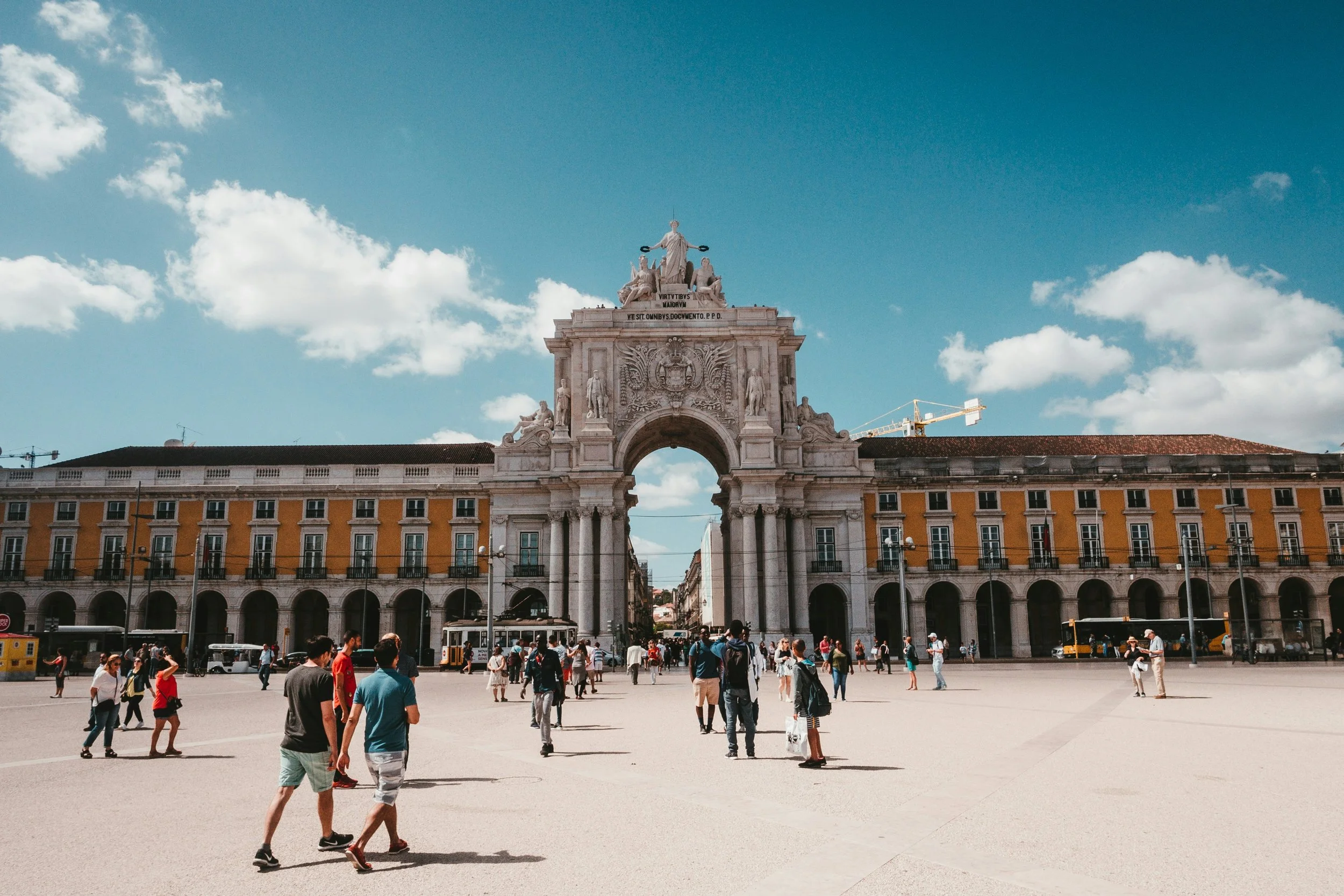
Rua Augusta
It is a stone triumphal arch built to commemorate the reconstruction of the city after 1755 earthquake.
Location
Lisbon is located in central Portugal, along the western coastline where the Tagus River meets the Atlantic Ocean. It is the capital and largest city in the country.
Historical Background
Lisbon is one of the oldest cities in Western Europe, with origins dating back over 3,000 years.
Settled by the Phoenicians around 1200 BC
Developed as Olisipo under Roman rule
Controlled by the Moors from the 8th century
Reclaimed in 1147 during the Christian Reconquista
Flourished during the Age of Discoveries (15th–16th centuries)
From Lisbon’s harbor, explorers such as Vasco da Gama sailed to India, opening sea routes that reshaped global trade.
In 1755, a catastrophic earthquake, tsunami, and fires destroyed much of the city. Lisbon was rebuilt under the Marquis of Pombal, creating the elegant, grid-style Baixa district — one of Europe’s earliest examples of earthquake-resistant urban planning.
Tourist Spots You Don’t Want to Miss (And Why)
Belém Tower (UNESCO World Heritage Site)
Built in the early 1500s, this fortress protected Lisbon’s harbor and symbolizes Portugal’s maritime power and exploration era.
Jerónimos Monastery (UNESCO)
A masterpiece of Manueline architecture funded by spice trade profits. Vasco da Gama prayed here before his voyage to India.
São Jorge Castle
Originally a Moorish fortress, it offers panoramic views and insight into medieval Lisbon.
Alfama District
Lisbon’s oldest neighborhood, filled with narrow streets and traditional Fado music, recognized by UNESCO as Intangible Cultural Heritage.
Praça do Comércio
A grand riverside square rebuilt after the 1755 earthquake, symbolizing Lisbon’s resilience and renewal.
Travel Tips for Lisbon
Stay at least 2–3 days
Wear comfortable shoes due to steep hills
Visit major attractions early to avoid crowds
Try a traditional Pastel de Nata
2. Porto
Portugal’s second-largest city, is a vibrant, hilly coastal city in the northwest known for its UNESCO-listed Ribeira district, iconic Dom Luís I Bridge, and as the birthplace of Port wine. It offers a mix of medieval charm, modern art, and a bustling riverside, with highlights including the São Francisco Church, Livraria Lello, and the Vila Nova de Gaia port cellars.
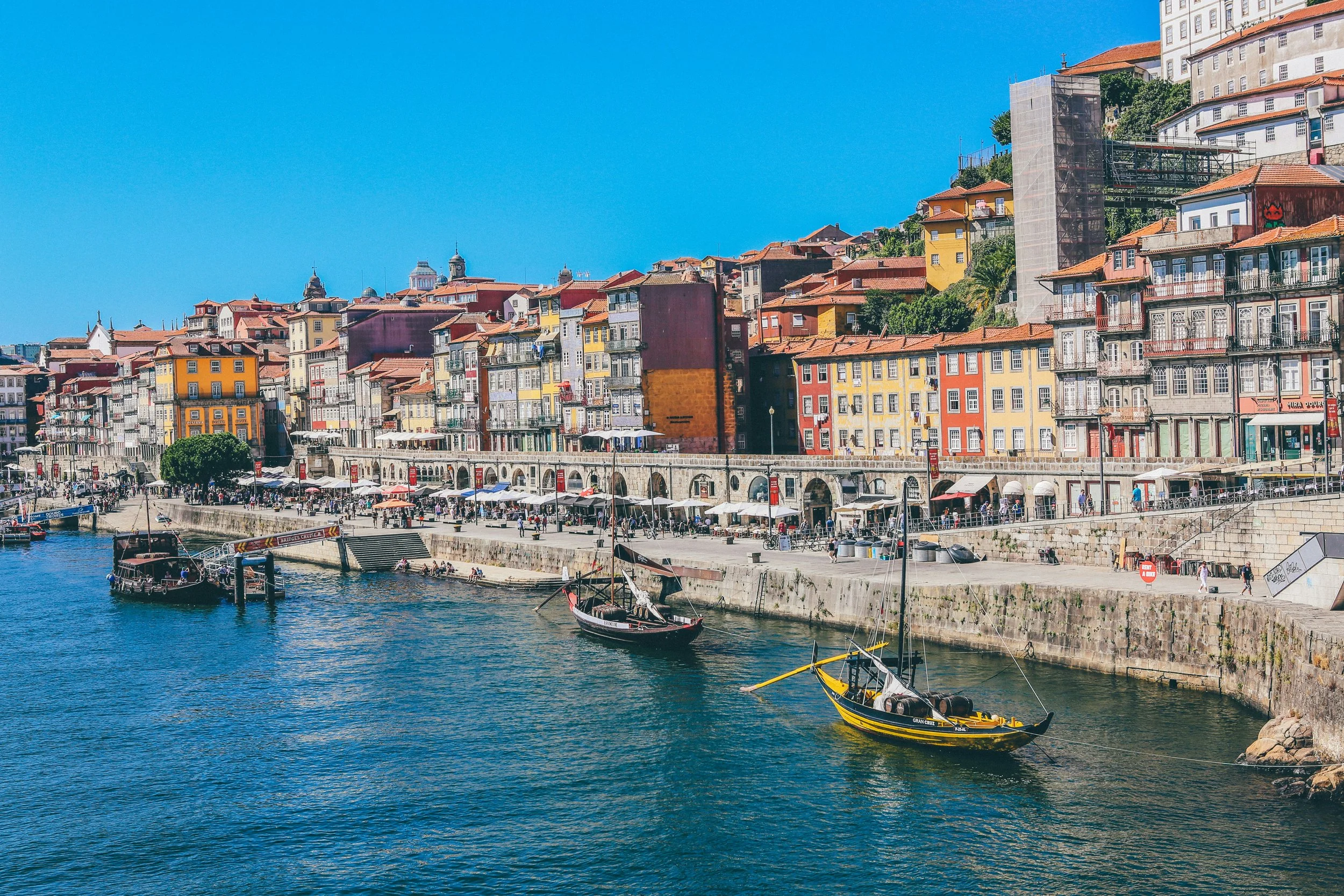
Ribeira Neighborhood
Ribeira is the historic, UNESCO-listed heart of Porto, Portugal, situated along the Douro River. Known for its colorful, narrow townhouses, medieval alleyways, and bustling promenade (Cais da Ribeira), it is a top destination for dining, nightlife, and iconic views of the Dom Luís I Bridge.
Location
Porto is located in northern Portugal, along the Douro River near the Atlantic Ocean.
Historical Background
Porto is one of Europe’s oldest settlements and gave Portugal its name (from Portus Cale).
Important Roman and medieval trading hub
Major maritime port
Central to the global Port wine trade since the 17th century
Historic center designated UNESCO World Heritage Site (1996)
Porto reflects Portugal’s commercial strength and architectural heritage.
Tourist Spots You Don’t Want to Miss (And Why)
Ribeira District (UNESCO)
A medieval riverfront quarter showcasing centuries of trade and colorful architecture.
Dom Luís I Bridge
Completed in 1886, this iconic iron bridge represents Porto’s industrial heritage.
Port Wine Cellars (Vila Nova de Gaia)
Historic wine lodges where Port wine has been aged and exported worldwide.
Livraria Lello
One of the world’s most beautiful bookstores, known for its neo-Gothic interior.
São Bento Railway Station
Famous for its blue-and-white azulejo tiles depicting important moments in Portuguese history.
Travel Tips for Porto
Ideal stay: 2–3 days
Take a Douro River cruise
Sample the local dish Francesinha
3. The Algarve
The Algarve, Portugal's southernmost region, is a premier European destination renowned for its dramatic limestone cliffs, golden beaches, and, vibrant, sunny climate. Key, picturesque, towns include Lagos, famous for its, historic center and, coastline, and the, popular, resort, hub of, Albufeira. It, offers, a blend of,, relaxing, beach, life, with, hidden, coves, and lively, nightlife,.
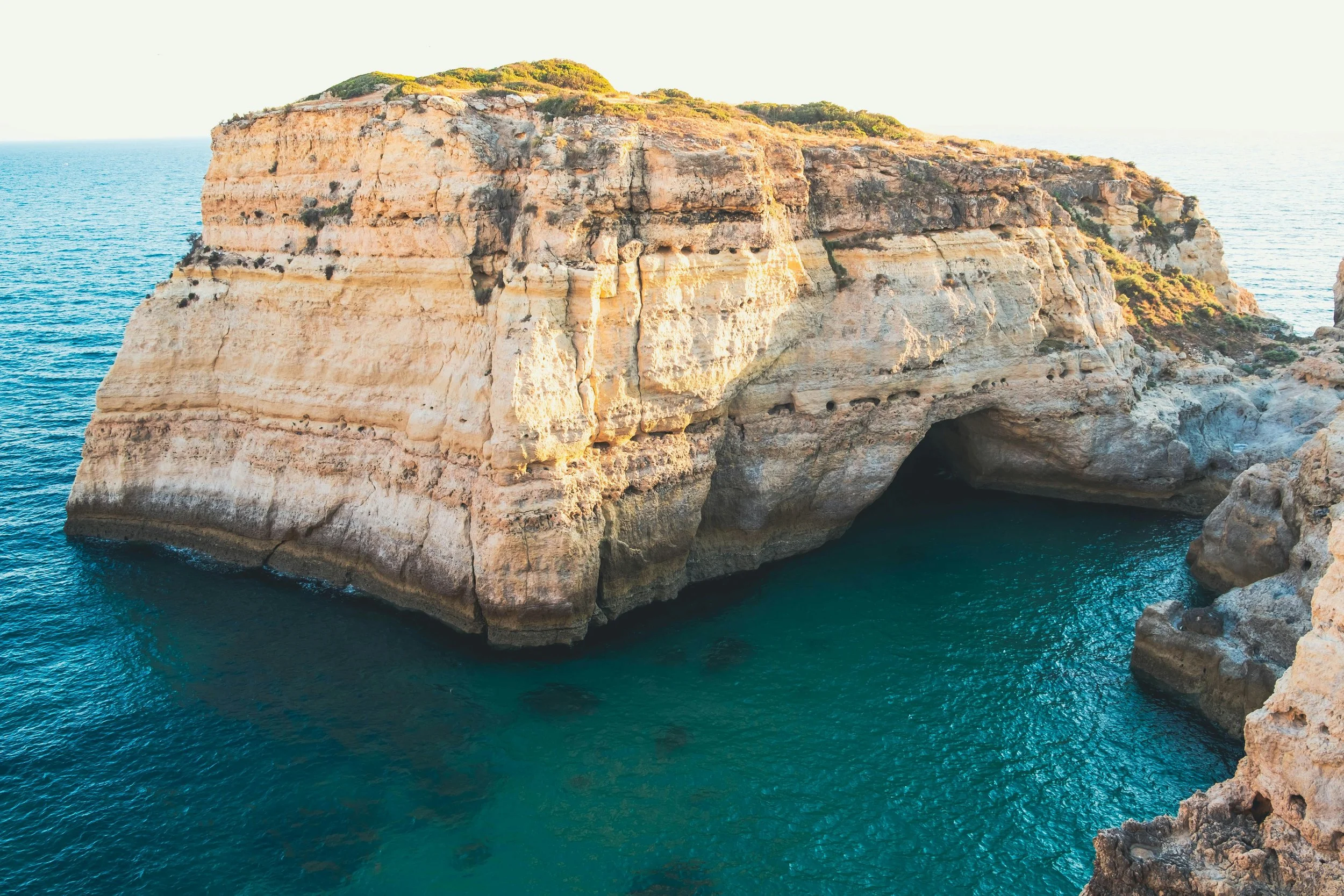
The Algarve
Location
Portugal’s southernmost region, bordering Spain and the Atlantic Ocean.
Historical Background
The name Algarve comes from the Arabic Al-Gharb, meaning “the West.” The region was under Moorish rule for nearly 500 years.
Historically, it served as:
A Phoenician and Roman trade route
A Moorish agricultural and cultural center
A key maritime region during the Age of Discoveries
Today, it is famous for beaches, but it also holds deep historical roots.
Tourist Spots You Don’t Want to Miss (And Why)
Ponta da Piedade (Lagos)
Dramatic limestone cliffs and sea arches — one of Portugal’s most photographed coastal landscapes.
Benagil Cave
A breathtaking sea cave with a natural skylight carved by erosion.
Silves Castle
A red sandstone Moorish fortress offering insight into Islamic Iberian history.
Cape St. Vincent (Sagres)
Once believed to be the “edge of the world” during medieval times.
Praia da Marinha
Frequently ranked among Europe’s most beautiful beaches due to its striking rock formations.
Travel Tips for the Algarve
Best months: May–June or September
Rent a car to explore smaller beaches
Book boat tours early during peak season
4. Sintra
located in the hills near Lisbon, Portugal, is a UNESCO World Heritage site renowned for its 19th-century Romantic architecture,, lush, forested terrain, and numerous, colorful, historic villas and palaces. A former summer retreat for Portuguese royalty, it features iconic sites like the hilltop Pena Palace, the, Moorish Castle, and the mystical, Quinta da Regaleira.
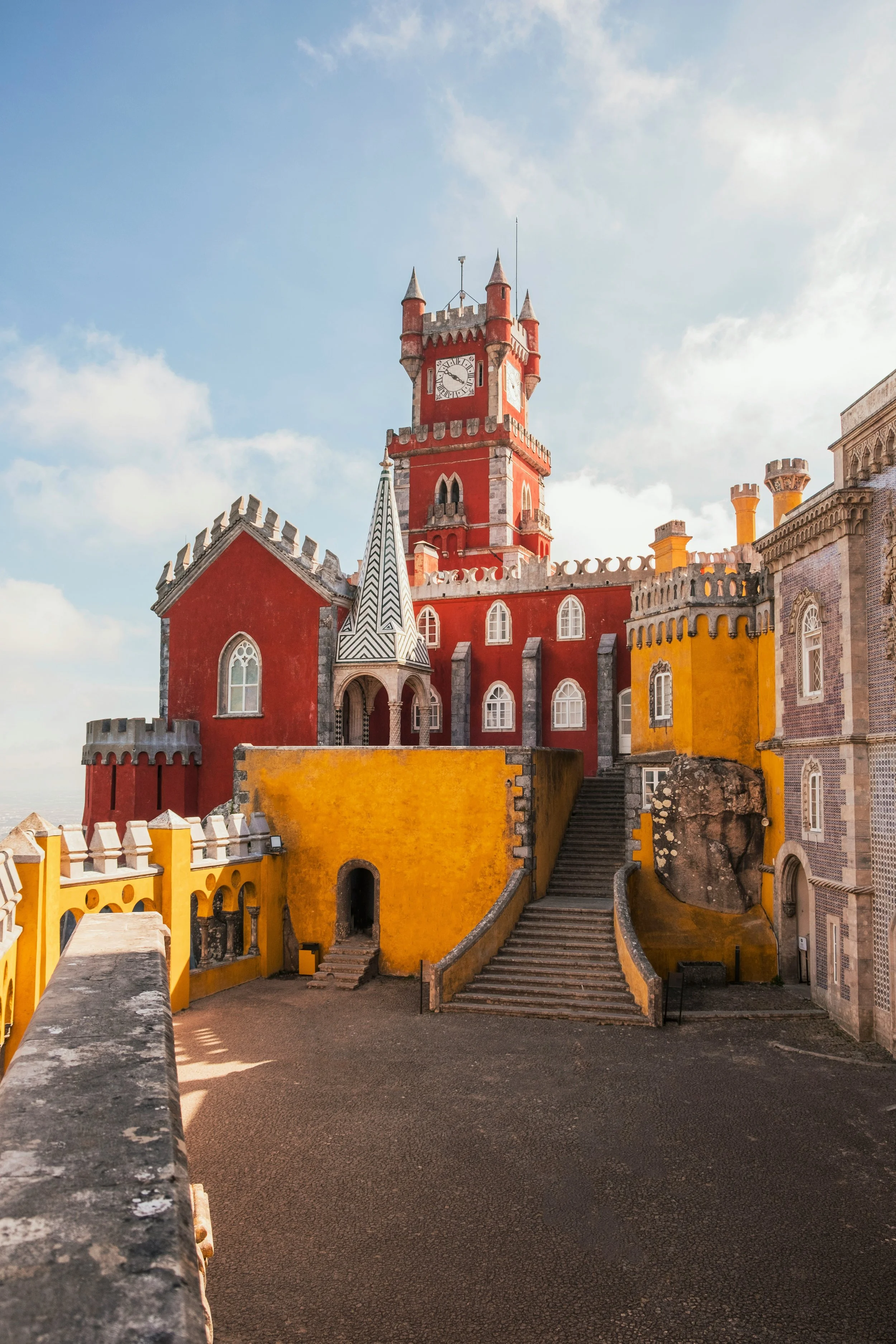
Pena National Palace
The Pena Palace is a Romanticist palace in São Pedro de Penaferrim, in the municipality of Sintra, on the Portuguese Riviera. The castle stands on the top of a hill in the Sintra Mountains above the town of Sintra, and on a clear day it can be easily seen from Lisbon and much of its metropolitan area.
Location
About 25 km (16 miles) northwest of Lisbon in the Sintra Mountains.
Historical Background
Sintra has been a royal retreat for centuries.
Important during Moorish rule
Became a medieval royal residence
Transformed during the Romantic period in the 19th century
Recognized as a UNESCO World Heritage Cultural Landscape (1995)
Sintra inspired writers such as Lord Byron, who called it a “glorious Eden.”
Tourist Spots You Don’t Want to Miss (And Why)
Pena Palace
A colorful 19th-century palace symbolizing Romantic architecture in Portugal.
Moorish Castle
Built in the 8th–9th centuries during Islamic rule.
Quinta da Regaleira
Known for its mysterious Initiation Well and symbolic design.
Sintra National Palace
A medieval royal residence marked by its distinctive twin chimneys.
Cabo da Roca
The westernmost point of mainland Europe with dramatic Atlantic views.
Travel Tips for Sintra
Arrive early to avoid heavy crowds
Use local buses or taxis between attractions
Allow a full day, ideally two
5. Madeira
is an autonomous volcanic archipelago of Portugal located in the North Atlantic Ocean, known as the "Pearl of the Atlantic" for its dramatic, green landscapes and year-round subtropical climate. Comprising Madeira and Porto Santo islands, it is famous for its namesake fortified wine, hiking along irrigation channels (levadas), and the vibrant capital, Funchal.
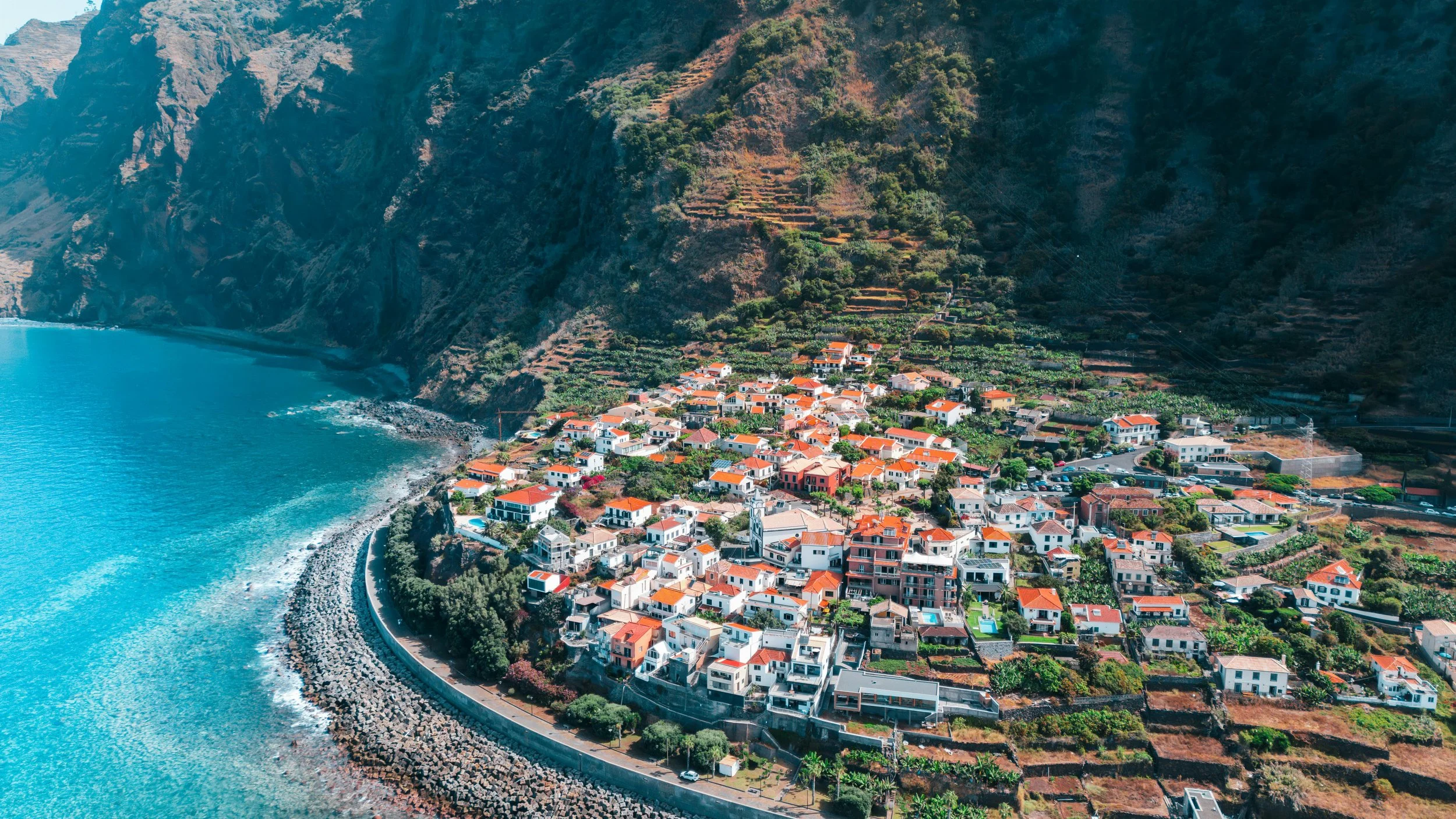
Madeira
A volcanic, mountainous region with high cliffs, located roughly 400 km north of the Canary Islands and 805 km southwest of mainland Portugal.
Location
Autonomous Portuguese archipelago in the Atlantic Ocean, about 1,000 km southwest of mainland Portugal.
Historical Background
Discovered in 1419 by Portuguese explorers, Madeira became:
A 15th-century sugar production center
A major exporter of Madeira wine
Strategically important in Atlantic trade routes
Its volcanic origin and subtropical climate make it geographically unique.
Tourist Spots You Don’t Want to Miss (And Why)
Funchal Old Town
Historic capital founded in the 15th century, reflecting Madeira’s colonial maritime roots.
Laurisilva Forest (UNESCO)
An ancient subtropical forest representing prehistoric vegetation.
Pico do Arieiro
One of the island’s highest peaks with dramatic mountain scenery.
Cabo Girão Skywalk
One of Europe’s highest sea cliffs offering panoramic ocean views.
Levada Walks
Historic 16th-century irrigation channels turned into scenic hiking routes.
Why Portugal Is Historically Significant
Portugal played a central role in global history during the Age of Discoveries, establishing sea routes to Africa, Asia, and South America. Its maritime empire influenced trade, culture, and language worldwide.
Across these five destinations, you will experience:
Moorish architectural influence
Medieval castles and royal palaces
Maritime monuments
UNESCO World Heritage Sites
Unique geological landscapes
Frequently Asked Questions
How many days do you need in Portugal?
Seven to ten days for Lisbon, Porto, and one additional region. Twelve to fourteen days allows for Madeira or the Algarve.
What is the most beautiful place in Portugal?
Many travelers choose Sintra or the Algarve coastline, though Madeira’s landscapes are equally impressive.
Is Portugal expensive?
Portugal is generally more affordable than many Western European countries, especially outside peak summer season.
Conclusion
Portugal offers far more than scenic views — it tells the story of explorers, kings, merchants, and cultural exchange. From Lisbon’s maritime monuments to Porto’s wine heritage, the Algarve’s coastal beauty, Sintra’s palaces, and Madeira’s volcanic landscapes, each destination reveals a different chapter of Portugal’s rich past.
If you are planning your first trip, these five places provide the perfect introduction to Portugal’s history, culture, and natural wonders.
Looking for more detailed planning help? Explore our in-depth guides on Lisbon itineraries, Algarve beach towns, Porto wine tours, and Madeira hiking routes to plan your perfect Portugal adventure.
Your journey through Portugal’s history, culture, and breathtaking landscapes starts now.
